Building
CareerHQ
A job search run like a sales pipeline, with AI doing the heavy lifting and me making the calls.
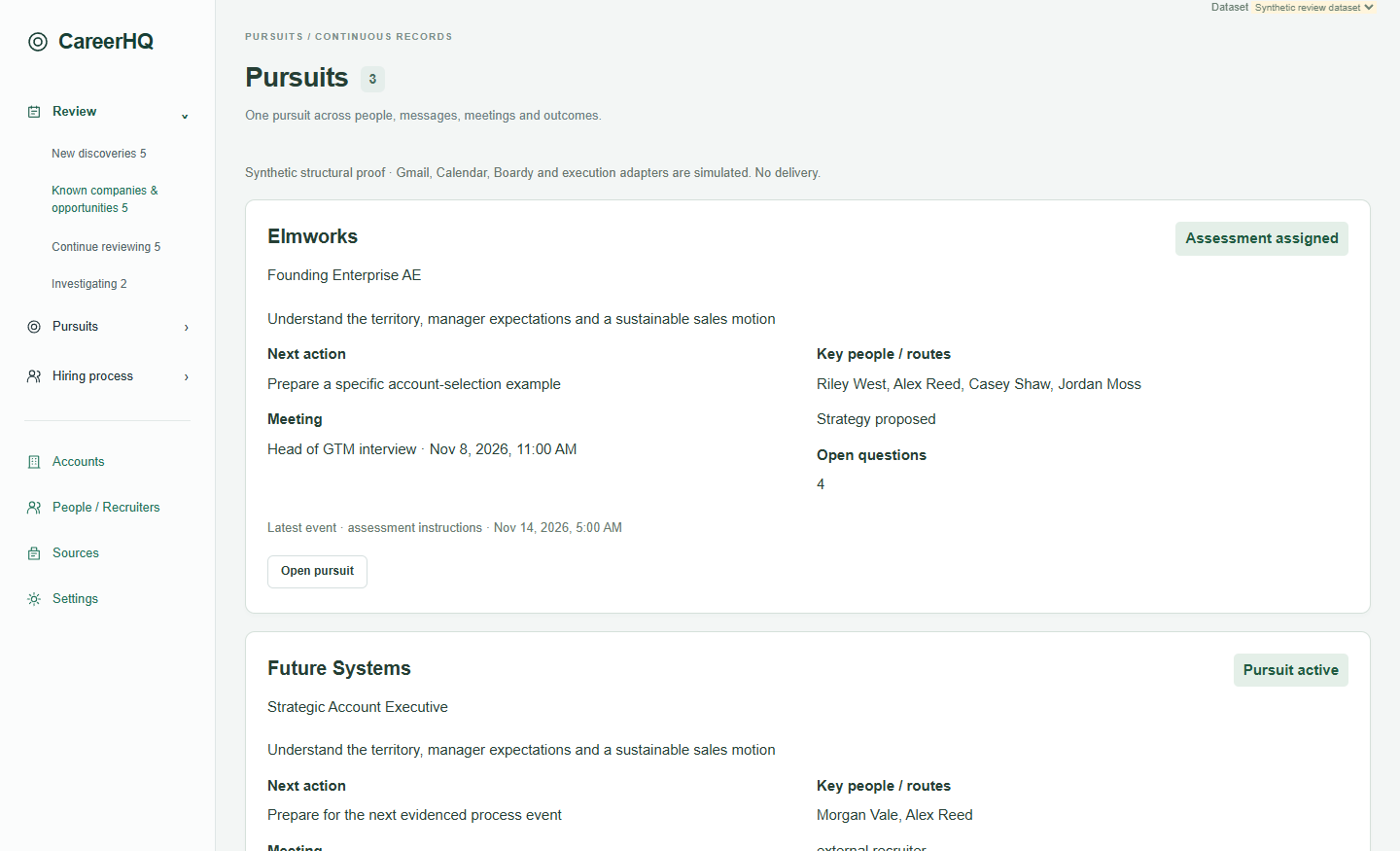
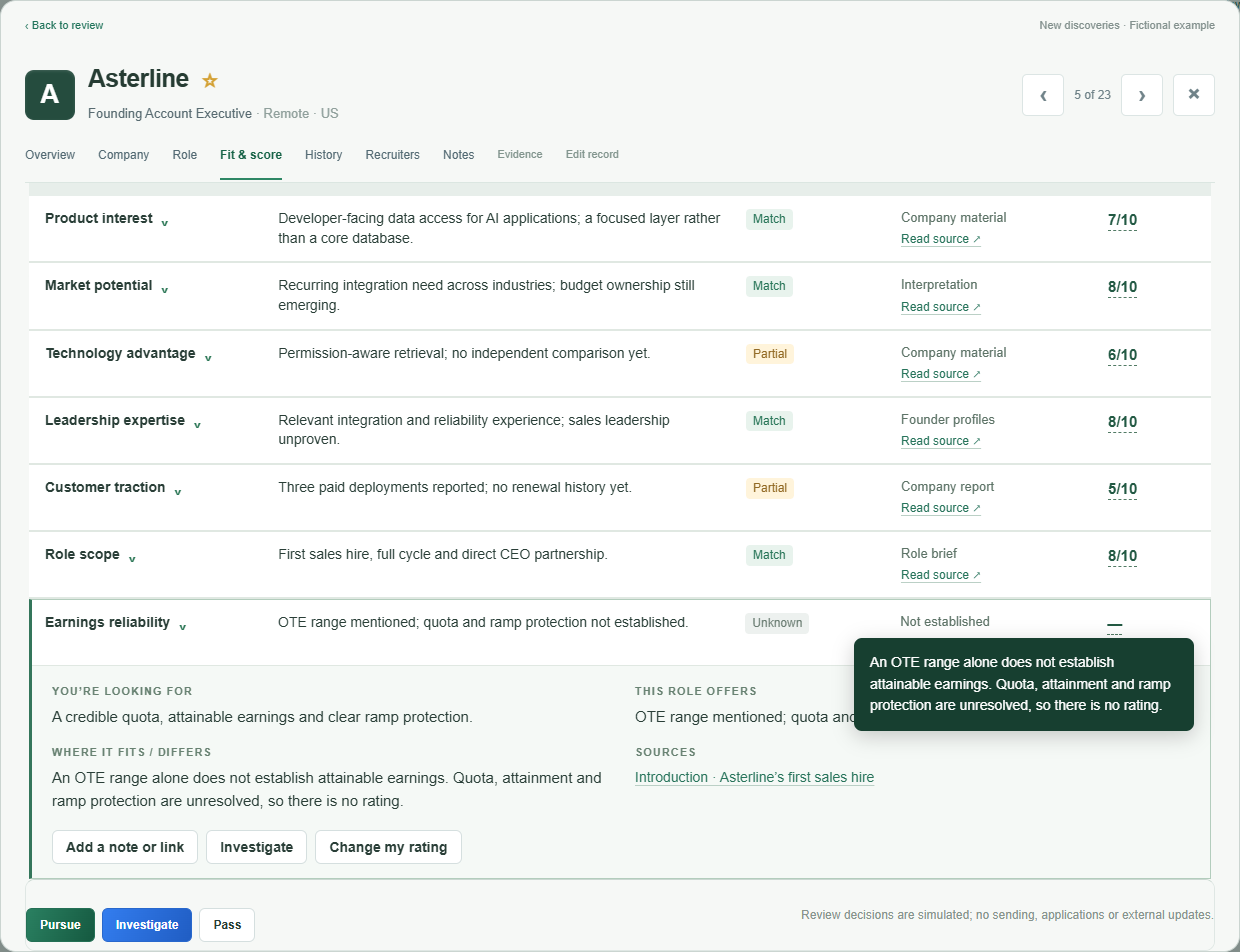
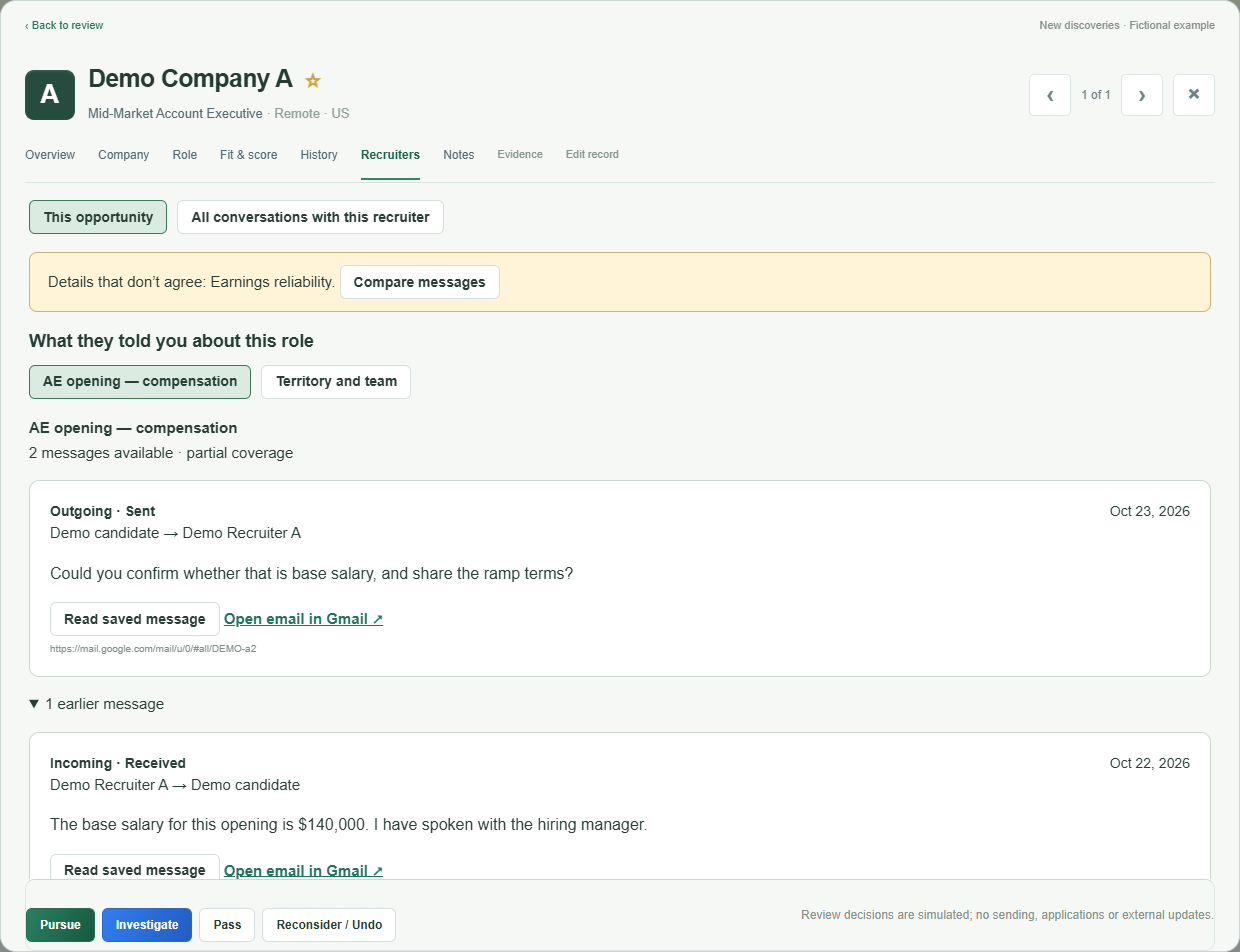
Where it's at: I use it every day for my own search. Gmail is connected; sending email and Google Calendar are next.
How it started
Looking for my next role, I found it surprisingly hard to stay organized. Opportunities come from everywhere: an outside recruiter connecting me to a hiring manager, an internal recruiter who thinks I'd fit, a company I want to break into the way I'd break into an account. All of it ended up scattered across LinkedIn, Gmail, Notion, my notes and my calendar. There's a Salesforce for selling. There's no Salesforce for getting a job.
How it works
CareerHQ pulls in my email and keeps a record of every person, company and conversation. Open models running on my own PC do the reading, sorting and research, so the routine work costs nothing. Frontier models handle the big picture: who to go after, what to say, and how to say it in my voice. Every opportunity moves through clear stages, and each stage tells me what it needs from me next.
The core idea is to hard-code the workflow, then point the intelligence at it.
What excites me
Knowing when something should be an agent and when it should just be an automation. Automations handle the repeatable work. Agents take on the things that used to be impossible: finding companies that fit what I'm looking for, researching the people I'm about to meet, drafting outreach. I stay in the loop on every decision.
What I'm working toward
A system that does for a job search what a CRM does for a sales team. Nothing slips, outbound doesn't stop just because a few conversations are going well, and I walk into every meeting prepared. I want my next role to last years, but layoffs happen to good people, and I want to stay ready. I think a lot of people could use this.
Where it's worked, and where it hasn't
I tried running my search in Notion. It got bogged down in databases and contact records, and it couldn't connect to my messages. Then, going back through old email, I found that a company I really admire had reached out once and I'd missed it completely. My best friend, one of the best salespeople I know, never reads those messages at all. That's the whole problem in one story.
What it's teaching me
Due diligence wins. CareerHQ scores every opportunity, shows me the gaps, and makes me close them before I move on. Remote or in office, travel, segment, team: I see the trade-offs with my eyes wide open instead of finding out later. Like any sale, a hiring conversation is a give and take, and the system shows me what they still need from me and what I still need from them.
It also showed me that I tend to over-prepare on some things and under-prepare on others. That's where Scaffold came from: learning the right thing, at the right moment, for the conversation in front of me.
If we've talked, CareerHQ is how I make sure I never drop the ball on you.
Questions I'm still chewing on
- How much should agents reach out on my behalf, and where should I always be the one who hits send?
- What's the best way to bring my meeting recordings in, so nothing said in a conversation gets lost?
- Could this help someone right after a layoff get back on their feet faster?
How do you keep your job search organized?